Seychelles · La Digue
La Digue is arguably the most photographed island in the Seychelles. Here, there are no cars: bicycles, a few scooters and traditional ox-carts are all it takes to explore a tiny territory hiding some of the most beautiful beaches in the world, natural pools between granite boulders, and a forest sheltering one of the rarest birds in the Indian Ocean. You come for the postcard image of Anse Source d'Argent, but you stay for its slow pace, unpretentious Creole tables and human-scale accommodation. Here is our complete guide to planning a stay on La Digue, covering beaches, activities, restaurants and places to sleep.
The beaches of La Digue
There's no better place to start than Anse Source d'Argent, reputed to be the most photographed beach in the world and regularly ranked among the ten most beautiful beaches on the planet (rated 4.9/5). Its fine white sand, crystalline turquoise waters and enormous granite boulders sculpted by time create a scene that photographers and filmmakers never tire of shooting. Protected by a reef, the water is shallow and generally very calm, perfect for wading and relaxing. Access is via L'Union Estate, at Anse Réunion, for a ticket costing about 150 Seychelles rupees (around 9 euros), which also grants access to the historic estate. Come early morning or late afternoon to avoid the crowds; at low tide, the beach stretches out at length between the rocks, and water shoes are recommended.
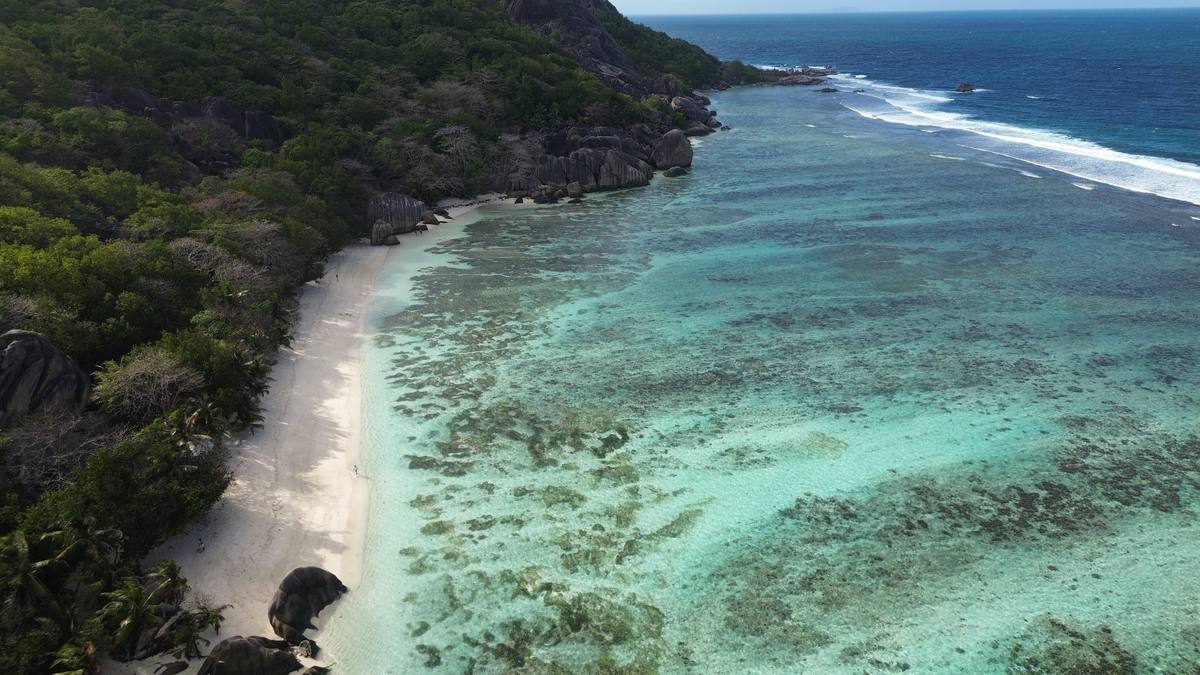
Anse Source d'Argent — the most photographed beach in the world
In the southern part of the island, Grand Anse is a magnificent wild beach (4.8/5): a wide stretch of white sand, crystal-clear water and a breathtaking setting, less crowded than Anse Source d'Argent but just as beautiful. With no coral barrier, the waves are high and currents sometimes dangerous, especially during the southeast monsoon from May to October: swimming is not advised and calls for great caution. There are a few small restaurants and toilets, access is free, and it can be reached by bike or in about 45 minutes on foot from the village of La Passe. Bring sun protection: shade is scarce.
To the east of the island, just behind Petite Anse, Anse Cocos charms with its white sand, shaded trees and above all its natural pools between the rocks, where you can swim safely (4.7/5). The sea is generally calm, but the southeast trade winds, from May to October, raise waves and a strong current. You'll often meet fewer than ten people here, and the remains of an old copra plantation make it a favourite with photographers. Allow 30 to 40 minutes' walk from Grand Anse or Anse Fourmis; bring water and snacks, as the nearest bar and toilets are at Grand Anse.
The southernmost and most isolated beach on La Digue, Anse Marron is considered one of the most beautiful in the Seychelles (4.9/5): unique granite, white sand, crystal-clear water and lush vegetation. In the bay, the sea quickly becomes deep in the absence of a reef, making swimming unsafe, but superb natural pools protected by the rocks let you cool off, especially at high tide. Access, neither marked nor easy, is a real little adventure through rocks, crevices and jungle: better not to venture there alone and to check with your accommodation first, with sturdy shoes and without young children.
To the north of the island, Anse Sévère is a wild beach framed by tropical trees opening onto a striking panorama (4.6/5): facing you, the silhouettes of Praslin, Mahé and their satellite islets stand out against a deep blue horizon. Less crowded than Anse Source d'Argent, it remains one of the island's most beautiful spots for sunset and photography, about 15 minutes by bike from La Passe. Waves can be strong depending on the season: ideal for photos, but caution is advised for swimming, and there are no facilities on site.
Activities and hikes on La Digue
On La Digue, the bicycle reigns supreme: no cars travel the roads, only bikes, a few scooters and the traditional ox-carts animate the island. Renting a bike, the island's top-rated activity (5/5), is the most natural way to discover every corner, from the village of La Passe to the hidden beaches of the east coast. Rental shops cluster near the jetty and at accommodations, for about 150 Seychelles rupees (around 10 euros) a day. Rent one as soon as you arrive at the jetty to make the most of your stay, and choose a model with a basket to carry your towel and mask.
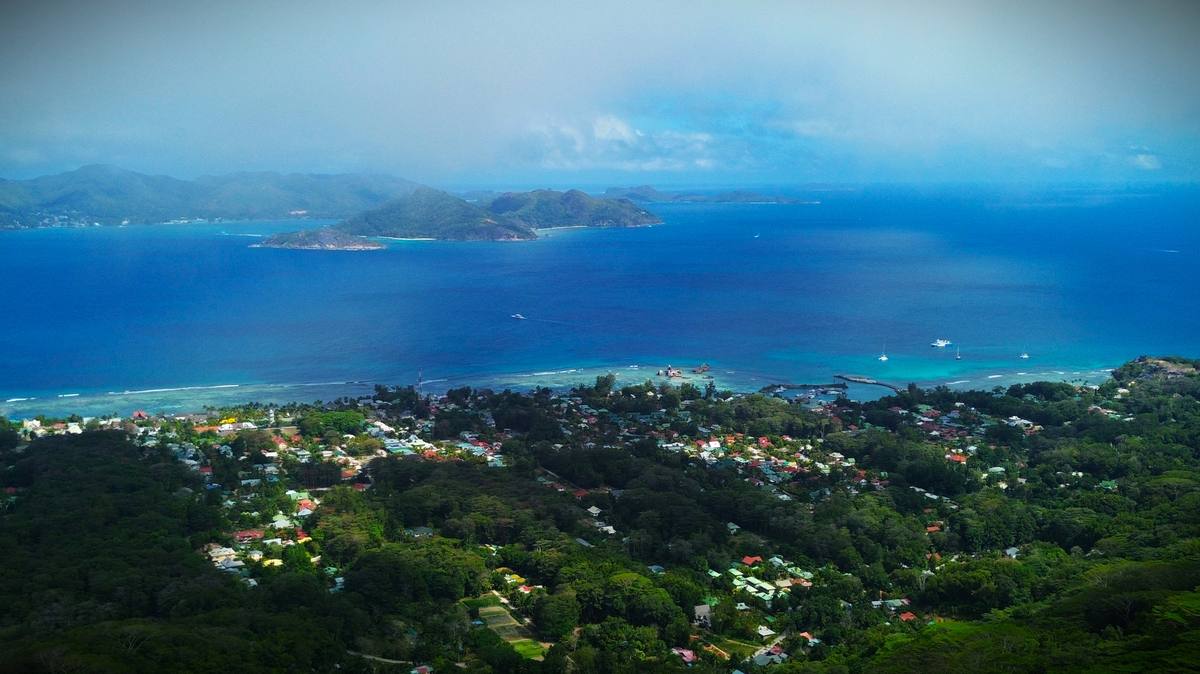
Nid d'Aigle, a 333-metre viewpoint over the whole island
Nid d'Aigle is La Digue's iconic viewpoint, perched at 333 metres altitude at the heart of the island (4.8/5). From this exceptional vantage point, the view takes in the whole island — colourful Creole rooftops, the busy port, beaches and forests — with Praslin, Mahé, Silhouette and dozens of islets on a deep blue ocean in the background. The climb is done by bike then on foot along a forest trail; allow about 20 minutes by bike then 15 minutes on foot from the centre of the island; access is free. Set off an hour before sunset to enjoy the golden light, wearing sturdy shoes as the trail is steep and can be slippery.
To see the seabed differently, the Crystal Water kayak excursion follows La Digue's spectacular coastline for two and a half to three hours (4.8/5), with coral, tropical fish and, with luck, green turtles. The route passes through secret coves and natural pools inaccessible on foot, for about 55 euros. Book at least the day before, with reef-safe sunscreen mandatory and water shoes recommended.
The natural pool formed between granite boulders, reachable on foot from Grand Anse via Petite Anse in about twenty minutes, reveals turquoise water of absolute clarity (4.8/5), with a bed of coral and rocks visible several metres down. The rocks form a natural shield allowing calm, safe swimming even when the sea is rough elsewhere. Access is free, but on foot only and with no facilities on site: come at low tide, with water shoes and, if possible, mask and snorkel to observe coral and fish.
L'Union Estate, a historic estate at Anse Réunion on the west coast, is also the mandatory gateway to Anse Source d'Argent (4.6/5). This former plantation is home to free-roaming Aldabra giant tortoises, a restored 19th-century copra mill, a vanilla plantation and the famous colonial wooden house. Open from 9am to 5pm for about 115 Seychelles rupees (around 7 euros), the ticket includes beach access: keep it safe, as it will be requested again at the beach entrance.
Bird lovers should also head to the Veuve Special Reserve, at Anse Réunion, the last refuge of the very rare Seychelles paradise flycatcher — to discover in the full guide.
Where to eat on La Digue
Nestled on the beachfront near the centre of La Passe, Le Repaire is both a boutique hotel and an authentic Italian restaurant (4.7/5). Its menu blends transalpine know-how with local produce: pizzas, pasta and meat dishes sit alongside creations built around red snapper and Seychelles grouper, spiced with Creole flavours. Desserts change daily, and the terrace facing the tropical garden and ocean offers an unforgettable setting at sunset. Book a terrace table to make the most of it.
Coco Bar is one of the island's most endearing discoveries: tucked at the end of the wild trail leading to Anse Cocos, this small artisanal counter serves freshly squeezed juices — mango, papaya, pineapple, star fruit, passion fruit, lime, orange or house blend — for 100 Seychelles rupees a juice (4.7/5). Its menu in four languages reflects the international flow of travellers who make this 45-minute hike from La Passe. Bring cash, and reward yourself with the passion-mango blend after the effort.
The story of Chez Jules, at Anse Banane, is a lovely one: two Brits fell under La Digue's spell and decided to stay and open this seaside restaurant (4.6/5). Their menu fuses Creole generosity with an Anglo-Saxon touch: octopus in coconut curry, lobster, squid, crab and the not-to-be-missed pan-fried fish with ginger, garlic and creamy white sauce. Fresh salads and local fruit juices round out a sincere culinary experience, best booked for dinner.
You enter Natural Bar Grill & Drinks, in La Passe, through an alley lined with shell curtains, tropical plants and coconut palms (4.6/5): a setting that sets the tone. On the menu, grilled fish of the day, tasty meats, homemade fresh juices and Creole cocktails, served barefoot in the sand in a warm, incomparably natural atmosphere. Order the grilled fish of the day, always caught that same morning.
For real food without breaking the bank, Gala Takeaway, near the Veuve Reserve, is the island's hidden gem: Creole dishes prepared fresh daily, served all day long (4.5/5). Fragrant curries, seafood specialities, rice and lentils, sandwiches and savoury pastries — everything is homemade, generous and cheap. It is, without question, the best value on the island, perfect before a bike ride or after Anse Source d'Argent.
Other tables are also worth the detour on La Digue: the Fish Trap Restaurant & Bar and its sunset cocktail facing Praslin, Bikini Bottom and its multicoloured façade, Tarosa Bar and its harbour view, Sunset Bar with its feet in the sand, or Le Relax Beach House for a full meal after the ferry — all to discover in the full guide.
Where to sleep on La Digue
A former coconut plantation turned into an iconic boutique hotel, Le Domaine de l'Orangeraie combines traditional Seychellois architecture with modern comfort, in the island's highest price category (4.9/5). Nestled amid lush gardens between pristine beaches and granite rocks, in La Passe, it embodies La Digue's way of life. Its eco-responsible commitment is genuine: reusable bottles, continuously available fountains, organic ingredients in the kitchen. Ask for an elevated villa for garden and sea views.
Ideally located on the seafront in La Passe, just steps from the jetty, Le Nautique Luxury Waterfront puts the best of the island within easy reach (4.7/5, high price category). Air-conditioned rooms come with minibar and fridge, with free internet access; the hotel offers a pool, sun terrace, breakfast and gift shop, plus parking and luggage storage, handy right off the ferry.
Three bungalows in authentic Seychellois style — Roro, Soso and Cola — are nestled in a 14,000 m² tropical landscaped garden, with palm trees, lawns and paved paths (4.6/5, mid-range price category). All-wood architecture creates a warm atmosphere, and each chalet has a private terrace, a balcony overlooking the garden and access to a shared barbecue area for Creole evenings. Ideal for a couple, a family or a small group wanting full independence, 2.2 km from Anse Source d'Argent, with Anse Réunion's sunsets close by.
Run by Alex, an owner known for his warm welcome and valuable island tips, Lucy's Guest House offers a simple, clean and friendly stay in traditional Seychellois architecture (4.4/5, small budget). Nestled in a lush garden at Anse Réunion, away from the tourist bustle, it is one of the island's best budget addresses. Don't hesitate to ask Alex for his secret spots: he knows La Digue like the back of his hand.
Hidden behind lush vegetation of banana trees, coco de mer palms and yellow hibiscus, Bois d'Amour Guesthouse is one of the island's most authentic addresses (4.4/5, mid-range budget). This family guesthouse, on the main road near Grand Anse, lets you immerse yourself in Creole life away from the tourist bustle, with excellent value for money. Book directly by phone to avoid platform fees, and rent a bike on site to explore all the island's beaches.
Other addresses round out La Digue's offering depending on your wishes: Domaine Les Rochers with its fully independent bungalows, Linsen Self Catering with its coconut-tree views, or the small Gorgeous & Peaceful tucked away in Belle Vue — all to be found in the full guide.
Practical information for La Digue
For everyday needs, La Passe covers the essentials. Mamma Mia Deli, an Italian grocery on the main street, offers cold cuts, cheeses, pasta and quality imported coffee, open Monday to Saturday from 8am to 6pm and Sunday from 8am to 1pm — ideal for putting together a picnic before Anse Source d'Argent. Just to the south, the Anse Réunion Supermarket, open every day at varying hours, rounds out the offering with fresh fruit, drinks and local Takamaka rum. For an authentic souvenir, the Vanilla Kiosk at L'Union Estate offers essential oils, pure vanilla extracts and Seychelles spices at low prices, worth a visit after seeing the estate's giant tortoises. Finally, La Digue Post Office, in the heart of La Passe and open Monday to Friday from 8am to 4pm and Saturday from 8am to noon, lets you send a postcard from this little corner of paradise in the Indian Ocean — a tradition many travellers enjoy.