Marrakech · Medina
All roads in Marrakech lead to one place: Jemaa el-Fna square, the medina's main gateway and the city's beating heart for nearly a thousand years. From there, the souks — a covered maze of craft workshops — spread out to the north, and a little further south, the Mellah quarter holds one of Morocco's most renowned spice markets. Three addresses, one day's walk, for a full immersion in medina life.
Jemaa el-Fna square, the city's beating heart
Founded in the 11th century by the Almoravid dynasty, Jemaa el-Fna square sits at the medina's entrance and, together with the medina as a whole, forms a UNESCO World Heritage Site since 1985. In 2001, the square itself was proclaimed a Masterpiece of the Oral and Intangible Heritage of Humanity — a rare distinction for a public space that's still very much alive. By day, the atmosphere stays fairly calm: a few fresh orange juice vendors, snake charmers and monkey handlers for passing tourists. From sunset onward, the square transforms completely: dozens of street food stalls set up, storytellers, gnaoua musicians and acrobats take over the space, and the air fills with the smell of grilled meat and spices. Access is free 24/7, but it's worth timing your visit for sunset to see it at its liveliest.
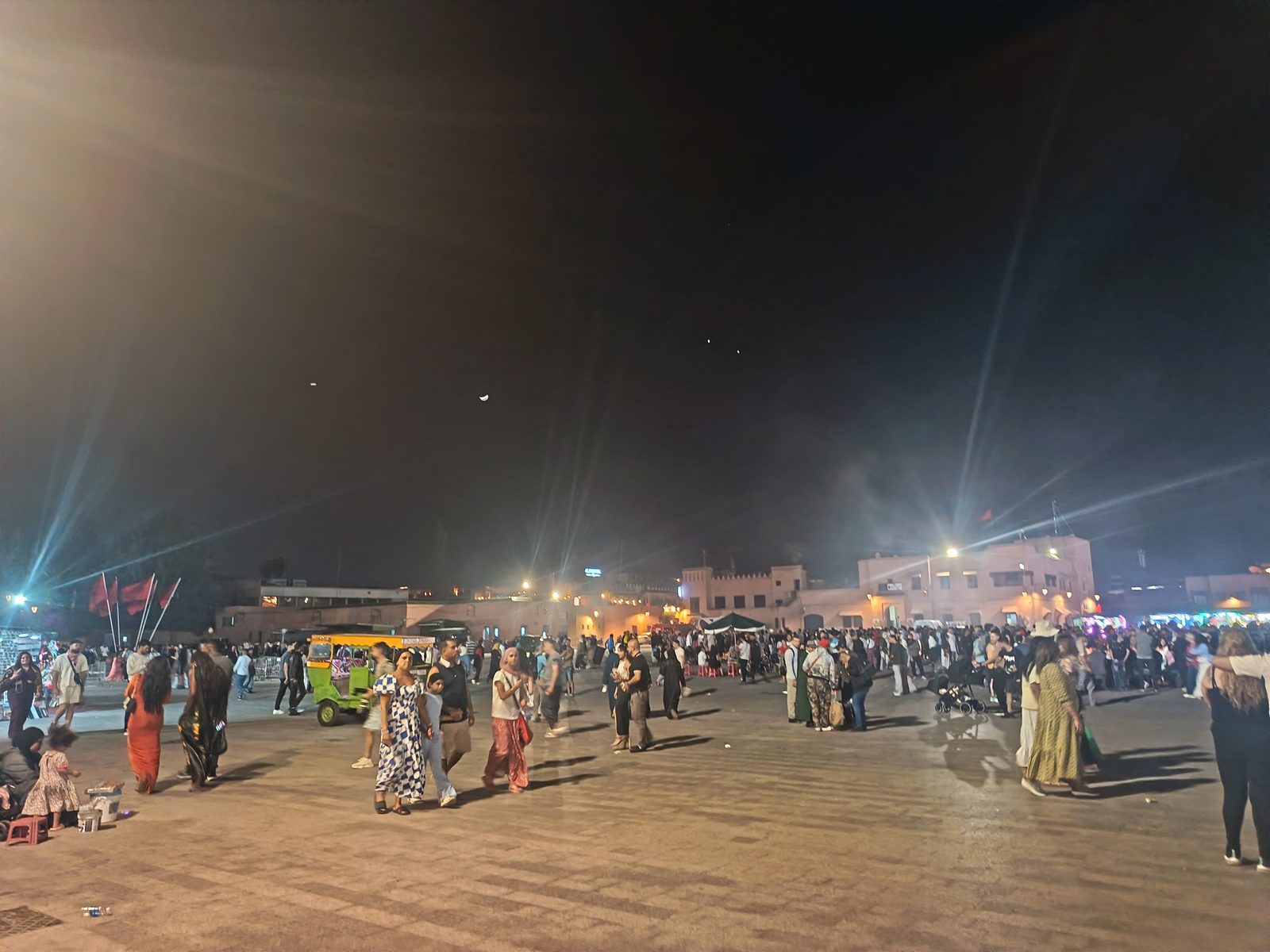
Jemaa el-Fna at dusk, amid street food stalls and performers
The souks, the grand covered market of craft
In place since the city's founding in the 11th century, the souks stretch north of Jemaa el-Fna square across several hectares of alleys covered in wooden lattice roofs that filter the light into dappled patterns — one of Marrakech's most photographed sights. They're historically organised by trade, each quarter dedicated to a craft: leather, spices, dyers, wrought-iron lanterns, Berber rugs, babouches... Getting lost is almost part of the experience, the network of alleys is so dense. Generally open from 9am until dusk every day, the souks slow down on Friday early afternoon for prayer time, and are noticeably calmer — and more pleasant to visit — early in the morning, before the groups arrive.
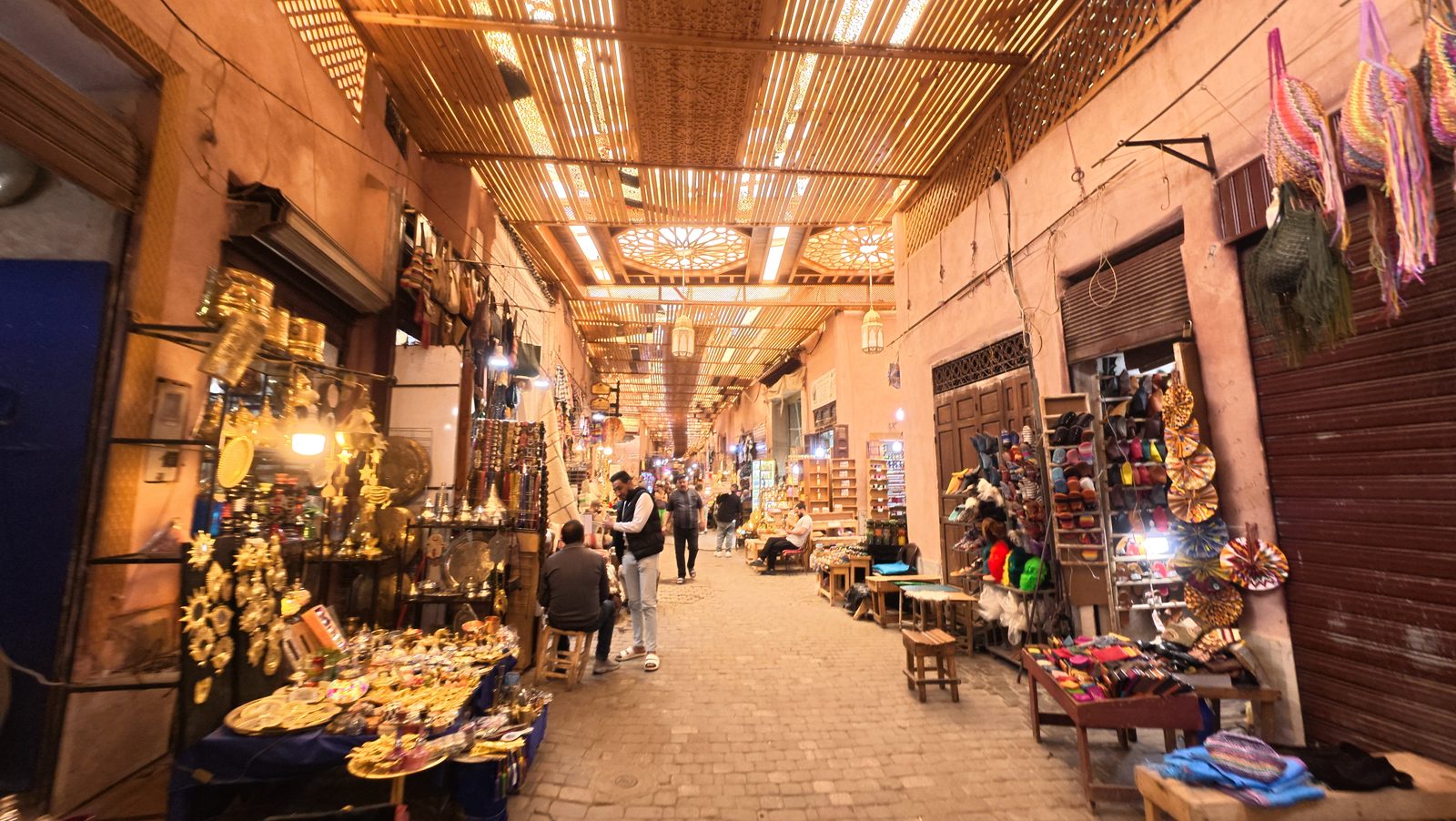
The wooden lattice roofs of the souks, filtering the light
The Mellah's spice merchants
The Mellah, Marrakech's former Jewish quarter built in 1558, is home to one of the city's most renowned spice markets, a little off the tourist flow of the northern souks. Stalls are recognisable from afar by their cones of coloured powders — saffron, cumin, paprika, turmeric — and their ras el-hanout blends, each grocer dosing their own recipe differently, often around thirty ingredients: star anise, cinnamon, long pepper, cardamom, nutmeg, juniper berry... At Ben Boubker's (Épicerie de Mellah), the stalls also overflow with oils — argan, avocado, coconut, mustard — and rose-based beauty products. The neighbourhood sells both wholesale and retail, often at gentler prices than in the main tourist souk, and haggling is expected.
Once the shopping's done, the Mellah is a good spot for a green break: a short walk away, the Secret Garden — two restored Saadian-era gardens around old reflecting pools — and the Cyber Parc Arsat Moulay Abdeslam, a huge free public park of 8 hectares on the Guéliz side, both offer a welcome breather after the buzz of the souks and the square.